
Care
An AI assistant for your care organisation's website: fewer calls about what is already there
Many phone calls to care organisations are about things that are already on the website: how the waiting list works, what the difference is between dementia care and physical care, how big a room is. An AI assistant on the website answers exactly those questions, using the text of your own site, and refers people to a staff member when the answer is not there. It can work without personal data, and no client data is involved.
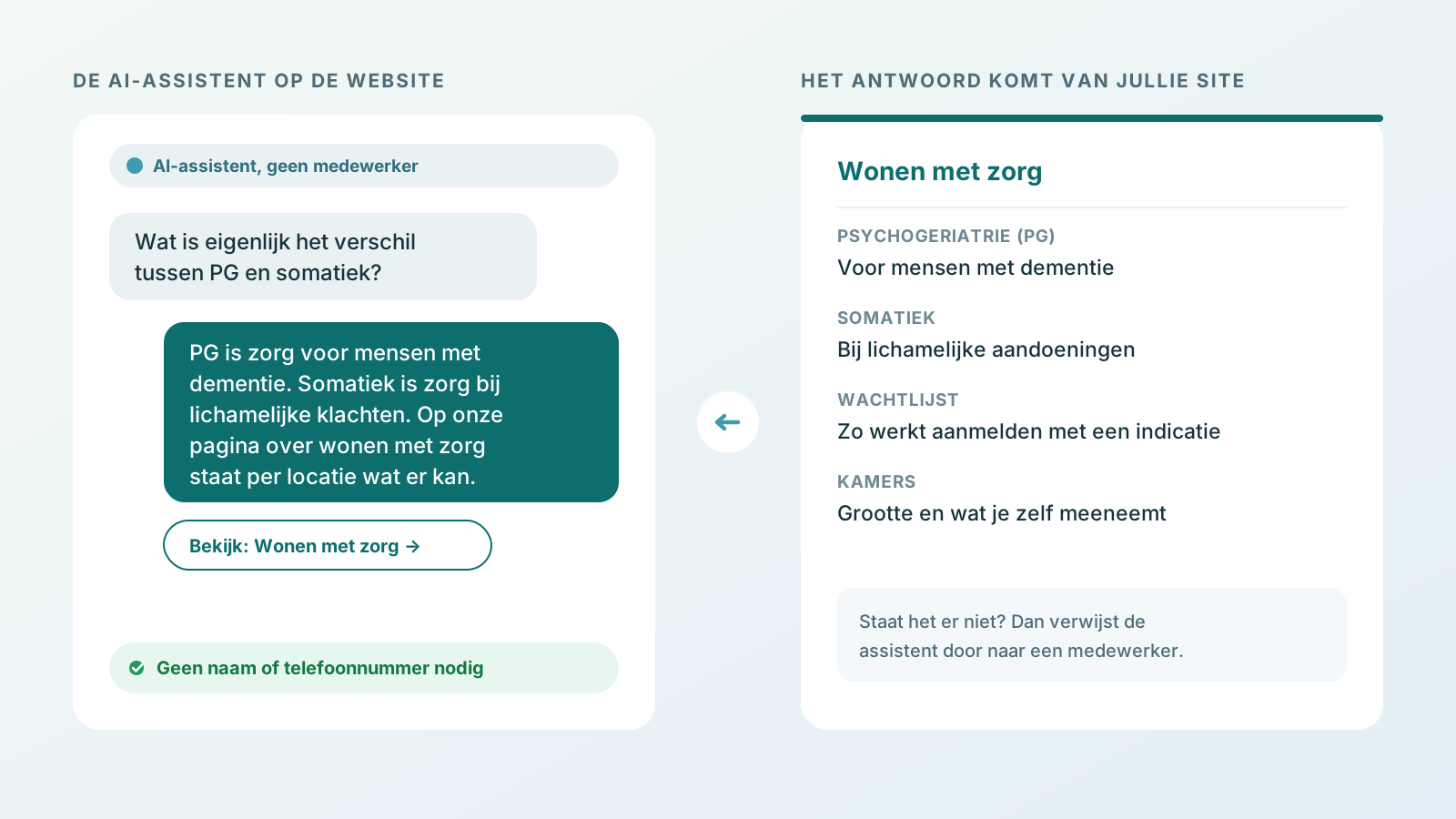
Why do people call about things that are already on the website?
The answers are often there. But a care organisation's website has to do a lot at once: locations, residential care, home care, day care, registration, jobs, news. An older person, or a son or daughter, with one concrete question has to work through all of those pages. That does not always work, so people pick up the phone.
On the other end of the line are staff who answer the same questions all day. That is not bad work, but it takes time away from the people who really need them: someone who can no longer cope at home, or a family member who needs to talk.
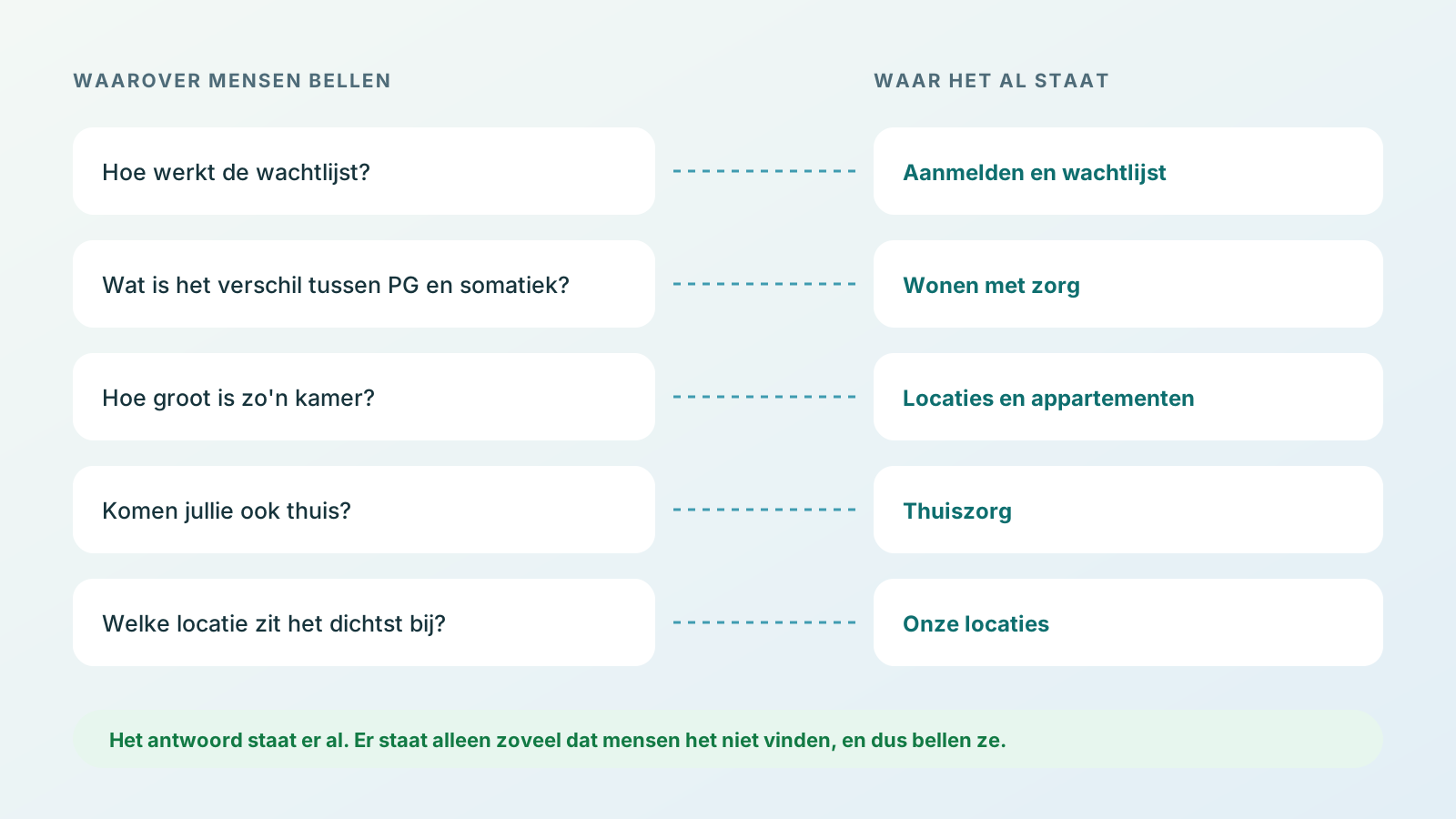
Which questions can a care organisation's AI assistant answer?
| Question | What the assistant does |
|---|---|
| How does the waiting list work? | Explains how registration works, as described on your site, and links to that page |
| What is the difference between dementia care and physical care? | Explains the difference and shows which locations offer which care |
| How big is a room, what do I bring myself? | Gives the information per location that is on the site |
| Which location is closest? | Lists the locations and how to get there |
| Do you also offer home care or housing? | Tells what you offer and points to those pages |
| My mother keeps falling, what should I do? | Gives no advice on a personal situation, but refers to a staff member |
There is a second benefit. Because the assistant points to the right page with every answer, people also see what else you do. Someone who calls about the waiting list rarely hears that there is also day care or home care. Someone who asks on the website gets that route as well.
What the assistant does not do
An AI assistant quickly sounds as if you are going to automate everything. That is not how it works. It takes over the questions that come back every day, and the rest stays with your people.
- It gives no medical advice and does not assess a personal situation.
- It does not promise a place or put anyone on the waiting list.
- It does not replace the phone. Anyone who wants to call can still call.
- If the answer is not on the website, it refers people to a staff member.
So the people on the phone can be there for those who need them
The goal is not less contact, but different contact. The website answers how big a room is. The conversation with a worried daughter stays with a person, who now has more time for it.
Can an AI assistant in care work without personal data?
Yes. You can set up the assistant so that it asks nobody for a name, phone number or other details and does not capture contact details. It only answers general questions with general information. There is no connection to a client record or any other system.
- At the top it says it is an AI assistant, not a staff member. The European AI Act asks for that too.
- The welcome message says people do not need to share personal or medical information.
- Conversations are stored within the EU, so you can read along and improve the answers. If someone does type something personal, it is in that conversation.
- There is a data processing agreement, and conversations are not used to train AI models.
Why the website is a good place to start with AI in care
There is still a lot of doubt about AI in care, and that is understandable. But that is exactly why the website is a good place to start. No client data is involved, nothing needs to connect to the electronic client record, and the assistant says nothing that is not already public on your site. You can look at it first, with your own colleagues, before you decide anything.
How it works at Senior Centraal
Senior Centraal provides day care and home care in North Brabant in the Netherlands. The same questions keep coming in, often from children and informal carers who only get to it in the evening: what does it cost, does the personal budget cover it, do you also come to Uden, can my mother with dementia go here. Senior Centraal put an AI assistant on its website, filled with its own information about regions, approach and personal budgets.
When it concerns a concrete situation, the assistant hands the conversation to a staff member via live chat, with the full conversation attached. Senior Centraal also chose to ask for contact details as soon as someone wants to take a next step. That is a choice per organisation: it can also work entirely without.
24/7
reachable, also in the evening and at the weekend
Instant
answers, without a queue or call-back request
“People no longer have to wait for an answer. That fits how we want to work.”
How to start
- For one week, tally which questions reception and the customer service line get most often
- Check whether the answers are on your website, and if not, whether they belong there
- Decide where the assistant refers people: a phone number, a contact form or live chat
- Write the welcome message: that it is AI, and that nobody needs to share personal details
- Review the example internally first, with colleagues from reception and client intake
Frequently asked questions
- Does an AI assistant replace reception or the phone?
- No. It takes over the questions that come back every day and whose answer is on the website. Anyone who wants to call can still call, and everything personal stays with your staff.
- Does the assistant give medical advice?
- No. It only answers general questions with the information on your website, such as how the waiting list works or what dementia care means. If it concerns a personal situation, it refers to a staff member.
- What if the answer is not on the website?
- Then it says so honestly and refers to a staff member. It does not make things up. Such a question is often a hint too: perhaps that answer belongs on the website.
- Do visitors have to enter their name or phone number?
- No. The assistant can be set up so that it asks nobody for details and does not capture contact details. The welcome message says people do not need to share personal information.
- Is this allowed under the GDPR and the AI Act?
- There is a data processing agreement, conversations are stored within the EU and not used to train AI models, and at the top it says it is an AI assistant. Because no client data is involved, the risk is small. Always have it reviewed by your own data protection officer.
- What does an AI assistant cost for a care organisation?
- There is a free plan, and paid plans start at €149 per month excluding VAT. We build an example on your own website for free, so you can see first whether it fits.
Ready to make this happen for your team?
Book a short demo and we'll show how Chatwize fits your customer questions, channels and processes.