Customer service8 min read
Outsource live chat or use an AI chatbot? How to choose
Chatwize teamPublished on
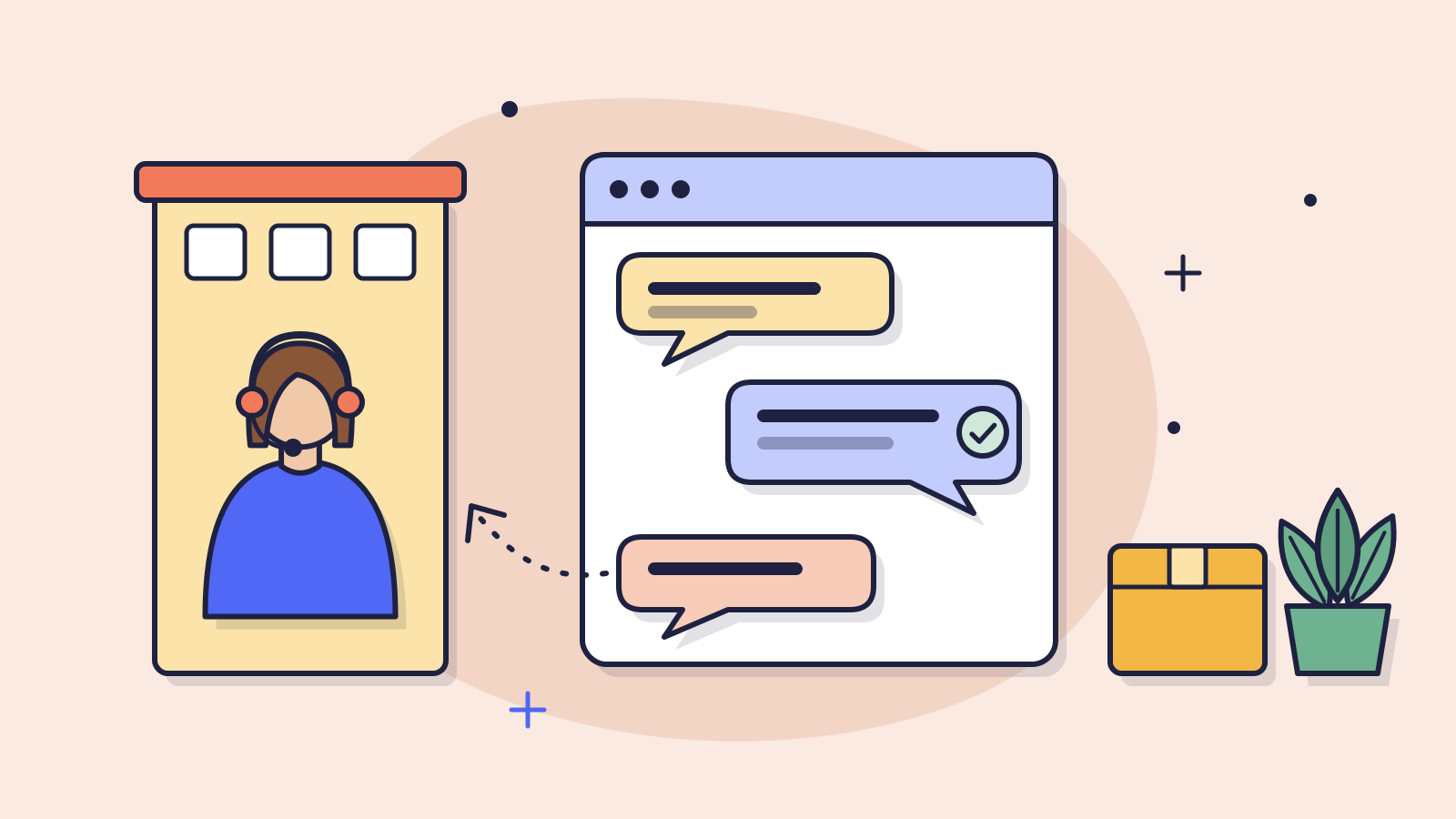
Outsourcing live chat means an external customer service agency staffs the chat on your website: their agents answer your customers in your name. An AI chatbot is the other answer to the same problem: it answers the questions that keep coming back instantly, day and night, and hands the rest to a person. Which one fits you mostly depends on how many of your chats are the same question.
This article puts the two side by side, honestly. You'll see when outsourcing makes sense, what an AI chatbot does differently, how to compare the costs, which questions to give to AI and which to a person, and how to choose in four steps. Often the answer is not one or the other, but a mix.
What does outsourcing live chat actually mean?
When you outsource live chat, a customer service agency takes over the chats on your website. You give the agency a knowledge document with your products, delivery times, terms and the tone you want. Their agents log in to your chat tool or work in their own system, and ideally the customer never notices that another company is answering.
There are a few models. You can outsource everything, only evenings and weekends, or only the overflow your own team can't handle. Many agencies also take phone and email. Think of an online shop selling garden furniture that gets three times as many chats in April and May as in November: it hires extra hands for spring instead of taking on staff.
When is it smart to outsource your chat?
Outsourcing makes sense when you are too small to staff the chat yourself, but your chats really need a person. That is the case with:
- Conversations that need judgement: a complaint, a damaged delivery, a customer asking for an exception.
- Advice that differs per customer and goes beyond what is on your site.
- Peaks you don't want to cover with permanent staff, like a season or a promotion.
- A team that is already at capacity and can't train a new colleague.
It gets less smart when most of your chats are the same question. A trailer rental company hears it every day: what is the deposit, can I tow it on a standard licence, what does a weekend cost, how late can I bring it back. If an agency answers those, you pay per conversation for someone retyping the answer from your terms page.
How is an AI chatbot different from an outsourced chat team?
An AI chatbot reads your own information, such as your product pages, terms and price list, and uses it to answer the customer. It replies within seconds, also at eleven at night, and handles dozens of conversations at once. When a delivery time changes, you update it once and nobody needs retraining. At an agency every agent has to hear the news, and when staff turn over, the training starts again.
To be fair, an AI chatbot isn't good at everything. It doesn't decide whether a customer gets a refund after the return period, it doesn't sense that someone is about to give up, and it shouldn't answer a question that isn't in your information. A good chatbot then says it doesn't know and hands the question to a person. Side by side:
| In-house | Outsourced | AI chatbot | Mix | |
|---|---|---|---|---|
| Who answers? | Your own team | Agency staff, in your name | Software, from your information | AI for routine questions, a person for the rest |
| Availability | Your own opening hours | Whatever you agree, including evenings and weekends | Day and night | Day and night for routine questions |
| Cost | Wages of your own people | Per conversation, per hour or per month, often with setup fees | Fixed monthly fee | Fixed fee plus fewer human conversations |
| Product knowledge | Best | As good as your knowledge document and their training time | As good as your website and documents | Routine knowledge with AI, tricky cases with your team |
| Complaints and exceptions | Yes | Yes, within the rules you set | No, hands over to a person | Yes, through the person |
| Control over customer data | Stays with you | A third party reads along | With your vendor | Both need agreements |
What does outsourced live chat cost compared to an AI chatbot?
Agencies usually charge per conversation, per hour or a fixed monthly fee, often with setup fees for training and a minimum number of hours or conversations. Public price lists are rare: you get a quote based on your volumes. Ask for two or three, with the same number of chats per month and the same hours, and convert everything to a price per conversation. Include the setup fee and the minimum.
An AI chatbot costs a fixed monthly fee with most vendors. At Chatwize that is €149, €249 or €549 a month excluding VAT, with a free plan to start on (prices as of November 2026). Doing it yourself mainly costs time: in the Netherlands, a worked hour cost an employer €45.0 on average in 2024, including employer costs (Statistics Netherlands, October 2025).
An example with round numbers. A wholesaler gets 400 chats a month, and an agent spends 4 minutes on a chat on average. Doing it in-house is then almost 27 hours a month, at €45 an hour about €1,200. Say 240 of those 400 chats are routine questions about delivery time, stock and shipping costs. If a €149 a month AI chatbot answers those, one answered question costs about €0.62. Put that next to the price per conversation in the agency's quote, and look at what's left for a person: the 160 chats that really need attention.
Compare per conversation, not per month
An agency that looks cheap per month can be expensive per conversation once a minimum applies. A chatbot that looks expensive can be cheap if it handles hundreds of routine questions. Divide each monthly fee by the number of conversations it actually handles.
Which questions go to AI, and which to a person?
The rule of thumb: if the answer is somewhere on your site or in your terms, AI can give it. If someone has to decide something, it's for a person. For an online shop, wholesaler or rental company it looks like this:
| Give to AI | Give to a person |
|---|---|
| What is the delivery time and what does shipping cost? | My parcel arrived damaged |
| Is this in stock, does it fit that model? | I want to return it, but the period just ended |
| How do I return something? | A quote for a large or unusual order |
| What does rental cost per day or weekend, what is the deposit? | The rented item is damaged, what now? |
| What are the opening hours, where can I collect? | A customer who is angry or disappointed |
For most businesses with a fixed catalogue or fixed terms, the left column holds the bulk of the chats. That's where an AI chatbot pays off most. The right column is where your own team, or an agency, makes the difference.
How do you choose in four steps?
- Tally your chats for a week. Note per chat the question, the time and whether a decision was needed. A simple list will do.
- Separate the routine questions. Count how many chats had an answer that was already on your site or in your terms. That is the part AI can take over.
- Check when they come in. If a large share arrives in the evening or at the weekend, you need something that's available then: an agency with evening shifts or an AI chatbot.
- Choose based on the ratio. Mostly routine questions: start with an AI chatbot and let your own team do the rest. Few routine questions and lots of custom work: outsource. Plenty of both: combine, with AI for the routine questions and an agency or your team for what's left.
That mix is often overlooked. If you already work with an agency, an AI chatbot in front of it can catch the routine questions, so the agency only gets the conversations that need a person. You then pay the agency for fewer, but heavier, conversations.
What should you watch with customer data?
Either way, another party reads your customers' conversations. With an agency it's their staff, with an AI chatbot it's your vendor. Under the GDPR you then need a data processing agreement. Also ask where the conversations are stored; at Chatwize your data is stored in the EU. And tell visitors they are talking to an AI assistant: the EU AI Act asks for that (Article 50).
Frequently asked questions about outsourcing live chat
- How much does it cost to outsource live chat for my online shop?
- It varies per agency. Most charge per conversation, per hour or a fixed monthly fee, often with setup fees and a minimum. Public prices are rare, so ask for two or three quotes with the same volumes and convert them to a price per conversation.
- Is an AI chatbot cheaper than outsourced live chat?
- If a large share of your chats are routine questions, usually yes: you pay a fixed monthly fee, even when more questions come in. If you get few chats, or almost every chat needs custom work, the difference is smaller and you'll need a person anyway.
- Can an AI chatbot fully replace an outsourced chat team?
- No. An AI chatbot takes over the questions whose answer is on your site or in your terms. Complaints, exceptions and decisions belong with a person. The chatbot hands those to your own team or to the agency.
- Can you combine outsourced live chat with an AI chatbot?
- Yes, and that's often the best choice if you get a lot of chats. The AI chatbot answers routine questions day and night, and the agency or your own team handles the conversations that need a person. That way you pay the agency for fewer conversations.
- What should I watch for with customer data when I outsource chat?
- Sign a data processing agreement, as the GDPR requires, and ask where the conversations are stored. That applies to an agency and to an AI chatbot. If you use AI, tell visitors they are talking to an AI assistant (EU AI Act, Article 50).
Read next
Customer service8 min read
AI chatbot vs live chat: when to use which?
When to choose AI, when a human, and when both? Comparison table, 6 moments AI wins, 5 where humans still win, and the hybrid split that works.
Customer service8 min read
Customer service chatbot: what it does and how to choose
A customer service chatbot answers the questions that come back every day. Which questions to give it, button bot or AI, and how to choose the right one in six steps.
Product8 min read
AI chatbot cost in 2026: what you pay monthly and up front
What an AI chatbot for your website costs per month and up front, with and without VAT, what is and isn't included, and a simple sum to see when it pays for itself.
Ready to make this happen for your team?
Book a short demo and we'll show how Chatwize fits your customer questions, channels and processes.